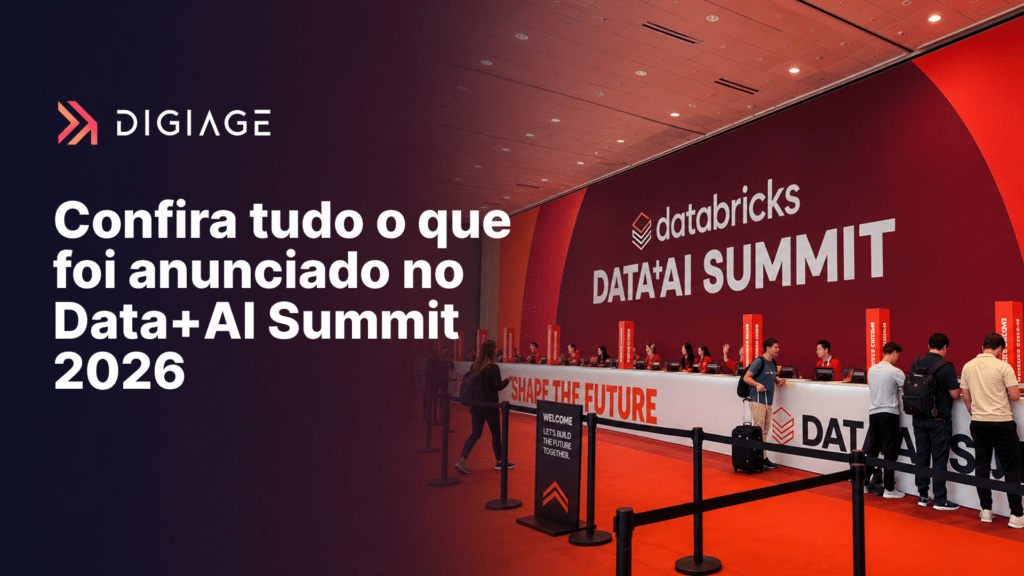
On Tuesday, June 16, San Francisco hosted the opening of Data+AI Summit 2026, the world's largest event dedicated to data, applications and enterprise artificial intelligence, hosted by Databricks. Day one sent a clear message: AI inside the enterprise is moving beyond answering questions about Lakehouse data to executing tasks, fixing problems and making decisions within business processes — always under human oversight and clear governance rules. Here are the day's key announcements.
Data that responds in milliseconds, with nothing duplicated
Companies that needed instant answers — for an operational dashboard or a customer app — used to copy data into a separate, faster system isolated from the rest of the operation, like keeping two versions of the same inventory in different places, with all the cost and risk that entails.
Databricks announced Lakehouse//RT, an engine that delivers millisecond responses directly on the data already in the platform, without copying anything to a parallel environment. In tests with retail, energy and telecom companies, response times dropped from seconds to milliseconds — in some cases dozens of times faster. It's like opening an express lane on the existing road instead of building a parallel highway just for those in a hurry.
The same logic applies to data ingestion: Zerobus Ingest brings in high volumes of events without relying on traditional message queues, and a new real-time mode comes to Spark's automated pipelines, shrinking the lag between what happens in the business and what shows up in reports to almost zero.
Data engineering gains autonomy
Databricks repositioned Lakeflow as a single hub to ingest, transform and organize data, with AI assisting at every step — including writing the code.
The standout is Genie ZeroOps, an agent that monitors pipelines, tables and models in production. When something breaks, it investigates the root cause through the data's full lineage, proposes a fix and tests it in an isolated environment with a copy of real data, before requesting human approval.
Other new features reinforce this automation: Lakeflow Designer lets business teams build visual pipelines with no code, Lakeflow Connect now offers more than a hundred prebuilt connectors to enterprise systems, and Lakeflow Jobs takes over orchestration of everything, replacing legacy tools many companies still maintain in-house.
From chat assistant to coworker
Genie One evolves from a chat box into a digital coworker, available in Slack, Teams and on mobile, able to prepare documents and cross-reference information from different systems on its own, while respecting the permissions of whoever is asking.
More relevant for those who own processes: any user can turn an instruction into a Genie Agent, a specialized, reusable assistant trained for a specific task and shareable with the team. Behind it is Genie Ontology, a living dictionary that learns from dashboards, queries and documents what each term really means in that business and which sources are most trustworthy — as if the AI had already read the company's entire internal handbook.
This new generation of agents also needed to retrieve information quickly and more cheaply: Lakebase Search organizes that memory like a smart archive, where frequently accessed content stays close at hand and everything else costs far less to store. And for teams building these solutions in-house, Agent Bricks serves as a complete workbench for building custom agents, choosing among different market models, with memory, search and security built in.
Who's in charge of the agents? Governance at a new scale
Multiplying AI agents raises an inevitable question: who controls what they can and cannot do? The answer was to expand Unity Catalog, the central governance catalog, and launch Unity AI Gateway, a control tower for all of a company's AI traffic that monitors cost, permitted actions and sensitive data, already integrated with names such as CrowdStrike, Okta, Palo Alto Networks and Zscaler.
Unity Catalog also gained a corporate glossary and business domains, ensuring a term like “active customer” means the same thing to an analyst, an executive team and an AI agent, in any cloud or region of the company.
Data and AI without boundaries between companies
Sharing data with partners has always meant choosing between duplicating files or living with network red tape. Databricks announced OpenSharing, the evolution of the Delta Sharing protocol created five years ago, now donated to the Linux Foundation as an open industry standard, which also enables sharing AI models and entire agents across companies and clouds.
One detail solves a recurring IT pain point: SecureConnect eliminates manual network configuration for every new partner, a process that used to take weeks. It's the difference between negotiating a private road with each partner and building a single toll plaza, configured once, that everyone passes through securely.
Marketing gets its own agents too
CustomerLake is a new customer data platform built inside the Lakehouse itself. Instead of exporting data to an external campaign tool, companies get agents that build a single profile for each customer and continuously decide the next best offer, on which channel and at what moment — replacing the manual cycle of defining audiences, validating, sending and measuring for every new objective.
Building an internal app as easily as having a conversation
Genie App Builder lets users describe a simple internal app, such as a form or dashboard, in natural language and watch it being built in real time, already connected to company data. What sets it apart from similar tools is control: App Spaces defines which data each team can access before the first app is created, like a building kit with the most delicate pieces already removed. Smaller apps also run on infrastructure that spins up and down automatically based on usage, cutting the cost of tools used only a few times a week.
What this means for decision-makers
Day one's announcements confirm a trend Digiage tracks closely: data and artificial intelligence are no longer isolated technology projects but have become decision infrastructure, with agents taking on operational tasks under governance layers equivalent to — or stronger than — those that already existed for traditional systems.
For sectors such as energy, financial services and manufacturing, the question is no longer whether it's worth investing in a solid, governed data foundation, but how fast the competition is already doing it.